Small public companies rarely walk into a toxic financing believing they are doing something risky. The paperwork looks like a routine convertible note. The funder moves quickly, asks for no board seat, and wires money in days rather than months. The damage does not appear until the first conversion notice arrives.
The label "toxic" does not describe intent. It describes structure. These instruments are built so the holder profits whether the issuer succeeds or fails, and the cost to existing shareholders is not determinable at signing.
The Variable-Rate Conversion Mechanic
A conventional convertible note converts at a fixed price. A toxic note converts at a discount to the market — commonly 20 to 50 percent off the lowest closing price, or lowest volume-weighted average price, over a trailing 10 to 30 trading days.
That single term changes everything:
- › The holder converts a slice of principal into shares at a discount.
- › Those shares are sold into a thin market.
- › The selling pressure pushes the price down.
- › The lower price sets a lower conversion price on the next tranche.
- › The next conversion produces more shares than the last.
This is why the market calls it a death spiral. Each cycle is individually rational for the holder and individually survivable for the issuer. The cumulative effect is not.
The Dilution Math Issuers Skip
Assume a $250,000 note, a 40 percent discount to the 20-day low, and a stock trading at $0.10. The first conversion prices at $0.06. If a series of conversions and resales walks the price to $0.01, the same remaining principal now converts at $0.006 — ten times the share count for the same dollars.
Model the note across at least four scenarios before signing:
- › Stock flat
- › Stock down 50 percent
- › Stock down 90 percent
- › Stock down 90 percent with a default triggered
The fourth scenario is where most issuers discover the real exposure, because default provisions frequently increase principal by 30 to 50 percent, escalate interest retroactively, and add liquidated-damages shares.
The Terms That Multiply the Damage
- › Ratchet provisions. A later financing at a lower price resets the conversion price of the earlier note downward, sometimes with no floor.
- › Warrant coverage. Warrants for 100 to 200 percent of principal, struck at or below market, give the holder a second discounted share pipeline.
- › Reserve requirements. The note may require the issuer to reserve three to eight times the currently convertible share count with the transfer agent, forcing repeated authorized-share increases.
- › Most-favored-nation clauses. Any better term granted to a later funder is automatically imported into the earlier note.
Why This Is a Securities Law Problem, Not Only a Finance Problem
Two separate exposures follow from the same document.
First, disclosure. An issuer that describes a variable-rate convertible note in its periodic reports as ordinary working capital financing, without describing the floating conversion mechanic, the absence of a conversion floor, and the resulting open-ended dilution, may have created a materially misleading impression even if every individual sentence is literally accurate.
Second, the resale side. Shares issued on conversion are frequently resold under a claimed Rule 144 or Section 3(a)(9) analysis. If the tacking analysis is wrong, or the holder is a statutory underwriter, or the note was structured so the funder is acting as an unregistered dealer, the resale itself becomes the enforcement issue — and the issuer's transfer agent instructions and legal opinions become part of the record.
What to Do Before You Sign
- › Get the full document set, including the warrant, the security agreement, and the transfer agent reserve letter — not just the note.
- › Model dilution under the four scenarios above and put the output in front of the board in writing.
- › Ask whether the funder is registered as a dealer and whether it has been the subject of an SEC action.
- › Price the alternatives honestly: a smaller registered offering, a Regulation A raise, insider bridge capital, or a slower burn rate.
Toxic financing terms rarely improve through negotiation, because the features that make the paper toxic are the features that make it profitable. The decision point is whether to sign at all.
Related Reading
- › How the SEC Builds a Securities Fraud Case
- › Toxic Financing: Death Spirals & Dilution
- › Disclosing Convertible Note Dilution in SEC Filings
- › Unregistered Dealer Enforcement Against Convertible Note Funders
<!-- related-links-injected -->
Authoritative Sources
- 15 U.S.C. § 78o(a)(1) — Registration of brokers and dealers (Exchange Act § 15(a)(1)) — Cornell Legal Information Institute
- 15 U.S.C. § 78c(a)(5) — Definition of “dealer” (Exchange Act § 3(a)(5)) — Cornell Legal Information Institute
- SEC v. Keener, 102 F.4th 1328 (11th Cir. 2024) — convertible note funder as unregistered dealer — U.S. Court of Appeals for the Eleventh Circuit
- SEC Investor Guide: Microcap Stock — dilutive financing and market risks — U.S. Securities and Exchange Commission
- 17 C.F.R. § 229.303 — Item 303, Management’s Discussion and Analysis (liquidity and dilution disclosure) — Electronic Code of Federal Regulations
- 15 U.S.C. § 77c(a)(10) — Exempted securities (Securities Act § 3(a)(10)) — Cornell Legal Information Institute
Primary sources are cited so readers can verify the law directly. Rules and staff guidance change; see our editorial and corrections policy to report an error or an outdated citation.
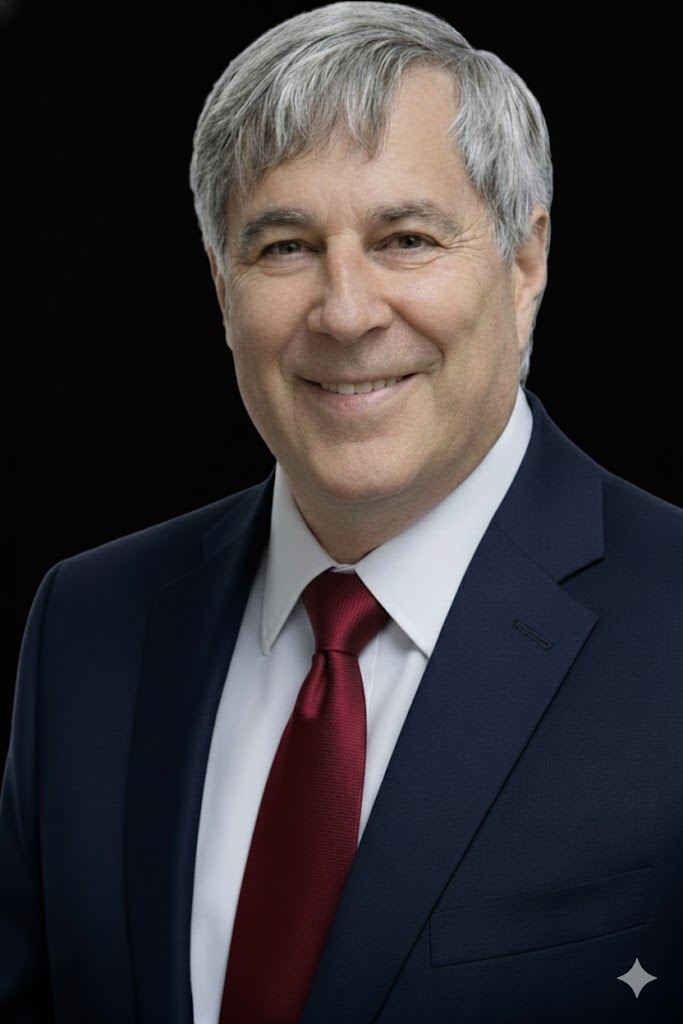
Frederick M. Lehrer served as an enforcement attorney in the SEC's Division of Enforcement at the Southeast Regional Office from 1991 through 2000, and concurrently as a Special Assistant United States Attorney in the Southern District of Florida from 1997 through 1999, prosecuting securities-related financial crimes. He has practiced securities and corporate law in private practice for more than twenty-five years, advising issuers worldwide on SEC registration, disclosure obligations, Regulation D private placements, Regulation A offerings, and going public transactions. The firm is based in Florida and serves clients internationally.
Questions about how this applies to your company are answered personally — most within the same business day. Flat-fee arrangements available for most work.